-
Giftcards
-
**Exclusive Bundles**
-
-
Brands
- Academy
- AFV Club
- AIP
- Airfix
- AK Interactive
- Ammo
- AMMO by Mig
- ARTESANIA
- Asuka
- Atlantis
- BADGER
- BANDAI HOBBY
- Beemax
- BELKITS
- Border Models
- Bronco Models
- Build Army
- Cada
- Carson
- Classy Hobby
- Das Werk
- DEF models
- DELUXE
- DMD Miniatures
- Double E
- Dragon
- EBBRO
- EXPO
- FoG models
- Gecko Models
- Gundam
- Hasegawa
- Hobbyboss
- Homefront Miniatures
- IBG
- ICM
- Italeri
- IXO
- Javis
- Joefix
- Juweela
- KITTY HAWK
- LGB Railways
- Masterbox
- Miniart
- MisterCraft
- MKFOG
- Model Scene
- Mr Hobby
- Not Yet Doomed
- NUNU
- Panda Models
- Pantasy
- PD Racing
- RB models
- Revell
- Riich
- Rye Field Models
- SOGA
- TAKOM
- Tamiya
- Thunder Models
- Toucan Models
- Trumpeter
- ValueGear
- Warlord Games
- Wood Trick
- Zimi Models
- Zoukei Mura
- Zvezda
-
- Model Kits
-
*NEW*
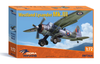
ICM 1/48 Scale WW2 RAF Churchill's "Flying Suitcase"
Product Code: ICM48354
Availability: Out of stock
£79.99
£70.34
Have a question?
These are plastic model sets that require assembly and painting. They do not contain paints and glues unless otherwise stated.
Description
In June 1936, the prototype of a new bomber, developed in response to updated British Air Ministry requirements, took to the skies. The Royal Air Force required a twin-engine strike aircraft with an enclosed cockpit, retractable landing gear, and the capability to carry a relatively large bomb load over long distances. The aircraft was designed by a team led by Dr. Gustav Lachmann.
Following a series of trials, serial production of the new bomber began in the spring of 1938. The aircraft received the designation HP.52 and the name Hampden, in honour of John Hampden, a 17th-century defender of civil liberties. The first production aircraft entered operational service in the autumn of the same year, and by July 1940, Handley Page had produced 500 units.
Starting in February 1940, English Electric also joined production, manufacturing an additional 770 aircraft by March 1942. The bomber featured a distinctive fuselage design — narrow and vertically deep — which earned it the nickname “Flying Suitcase.” Over time, the HP.52 Hampden underwent several external modifications, including redesigns of the nose section and cockpit glazing.
With the introduction of newer heavy bombers, the Hampden was gradually withdrawn from RAF Bomber Command service. However, it continued to operate with RAF Coastal Command, where it served effectively as a long-range torpedo bomber.
Key Features
HP.52 Hampden bomber featuring characteristic late-production details
The geometry and proportions of the original aircraft are preserved
Detailed rivet detail on the fuselage, wings, and tail surfaces
The kit includes multiple bomb types that can be placed in the bomb bay and under the wings
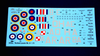
A decal sheet with marking options for four aircraft
Model Information
Scale: 1:48
Number of Parts: 462
Length: 341 mm
Width: 442 mm
Includes detailed assembly instructions
Highly detailed sprues with high accuracy made from quality plastic

Description
In June 1936, the prototype of a new bomber, developed in response to updated British Air Ministry requirements, took to the skies. The Royal Air Force required a twin-engine strike aircraft with an enclosed cockpit, retractable landing gear, and the capability to carry a relatively large bomb load over long distances. The aircraft was designed by a team led by Dr. Gustav Lachmann.
Following a series of trials, serial production of the new bomber began in the spring of 1938. The aircraft received the designation HP.52 and the name Hampden, in honour of John Hampden, a 17th-century defender of civil liberties. The first production aircraft entered operational service in the autumn of the same year, and by July 1940, Handley Page had produced 500 units.
Starting in February 1940, English Electric also joined production, manufacturing an additional 770 aircraft by March 1942. The bomber featured a distinctive fuselage design — narrow and vertically deep — which earned it the nickname “Flying Suitcase.” Over time, the HP.52 Hampden underwent several external modifications, including redesigns of the nose section and cockpit glazing.
With the introduction of newer heavy bombers, the Hampden was gradually withdrawn from RAF Bomber Command service. However, it continued to operate with RAF Coastal Command, where it served effectively as a long-range torpedo bomber.
Key Features
HP.52 Hampden bomber featuring characteristic late-production details
The geometry and proportions of the original aircraft are preserved
Detailed rivet detail on the fuselage, wings, and tail surfaces
The kit includes multiple bomb types that can be placed in the bomb bay and under the wings
A decal sheet with marking options for four aircraft
Model Information
Scale: 1:48
Number of Parts: 462
Length: 341 mm
Width: 442 mm
Includes detailed assembly instructions
Highly detailed sprues with high accuracy made from quality plastic